


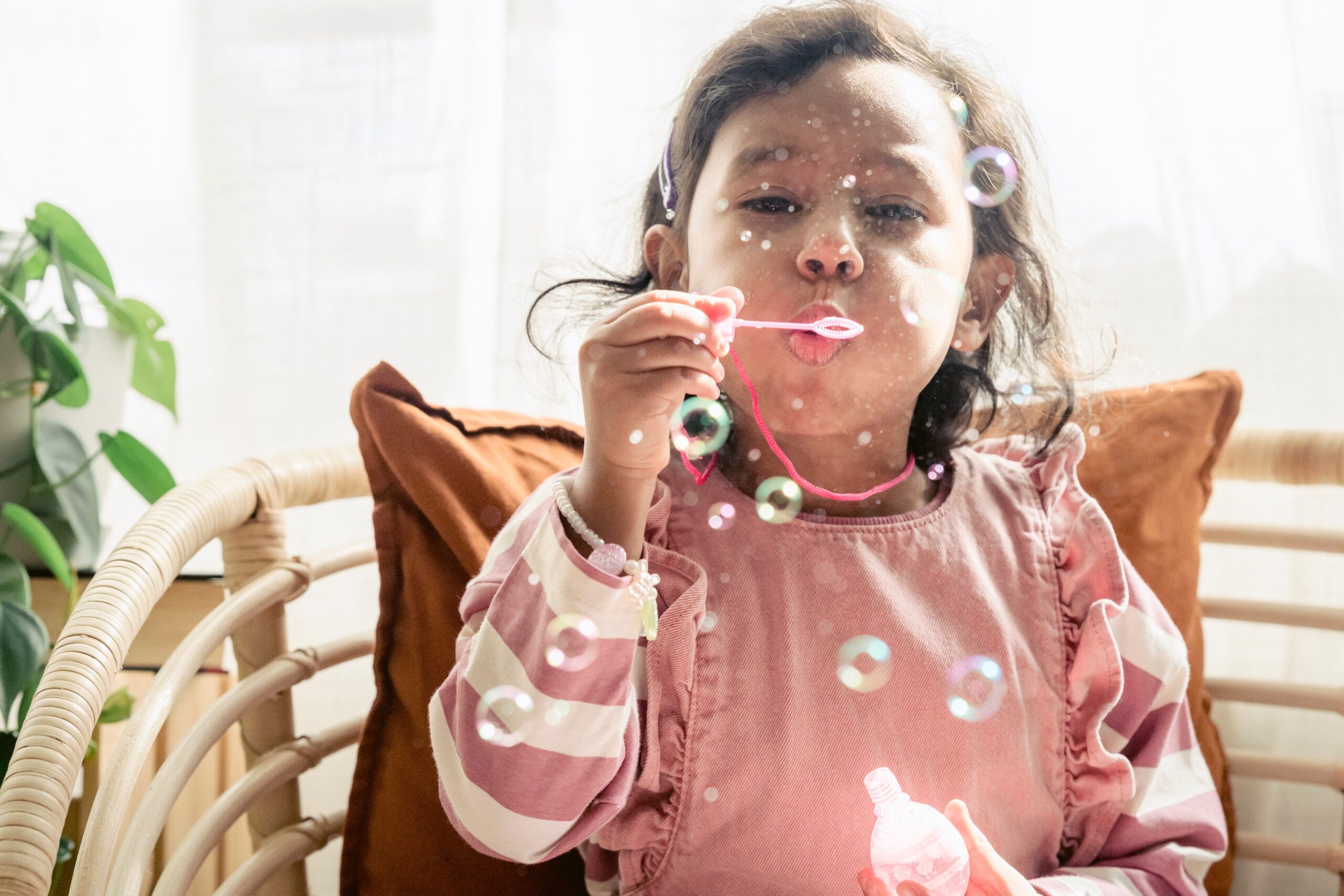
Why play is the emotional sanctuary every child needs.
Play is not urgent. It will not wake a child up in the middle of the night like a bad dream or a bladder in need of release. Play doesn’t hijack a child’s attention like an empty stomach in need of food or an injury in need of first aid. While the instinct to play is inherent to all mammal species, it isn’t bossy nor does it demand the space it requires.
Play is often pushed aside when other things take over, such as structured activities, shopping, or screen time. Play is often seen as frivolous, something that happens when more important things like math or reading are finished. While we readily accept that getting ‘lost in play’ should be part of childhood, it is often treated as a luxury and undervalued.
However, play is critical to a child’s overall development like oxygen. Play gives children the space to master life skills. It also fosters brain integration and creates a networked system that will be used in problem-solving and creativity. When a child is at play, they are leaping ahead developmentally and forming a sense of identity and self-agency. Play serves a purpose, but we fail to recognize nature’s intention in hard-wiring the play instinct into us.
True Play
It would be a mistake to assume that all play is created equal. Based on the relational and developmental approach of psychologist Gordon Neufeld, true play does not involve work or a focus on outcomes, such as task mastery or learning. True play is also not for real: there are no consequences that come with their actions, like pretending to burn their food, get married, or crash race cars. True play allows a child to project what is within on the things that surround them; for example, animal figures may come alive with frustration while pretend babies feign helplessness.
True play also requires a sense of safety, where one is not subject to being emotionally wounded by others. Play is engaging and holds one’s attention, unless other pressing matters appear. Finally, in play there is a sense of freedom that one is not bounded by the limitations inherent to the human form, because anything is possible in our imagination.
Many things masquerade as play but do not meet the criteria for true play, such as video games or structured activities.
Video games are built on someone else’s story line or algorithms, while structured activities like soccer or swimming have specific outcomes. The type of play children need is not based on putting things into them, but drawing out what already exists inside. In play, the goal is not to push a form onto a child but rather to free their spirit to explore, discover, and to express itself.
Play Serves Emotion
One of the most important functions play serves is in the development of a child’s emotional system and preserving psychological well- being. According to neuroscientists, emotional development is as sophisticated as cognitive development but needs a playground to grow and evolve in.
Children are born with immature systems and cannot differentiate among their emotions. This is why young kids are known forspontaneously spewing out intense emotion and being surprised by their own outbursts. They often lack words to explain or make sense of what has stirred them up. Sophistication in managing one’s emotions relies on being able to express emotion, translate emotion into a ‘feeling word’, feel vulnerably, and on having sufficient brain development so as to temper one’s reactions and reflect on them.
The challenge is that this type of growth occurs best when the emotional system doesn’t have to work at solving problems for a child in real life – like getting someone close to you, or when you are scared and frustrated and need help. Brain integration is most formidable when the child is not preoccupied with survival needs, like attachment and safety. The beautiful thing about true play is that it provides the brain with the rest it needs to forward development. True play is not work, not real, and is expressive, which allows it to act as a shield for emotional expression. Play is rest, and this permits growth.
Play affords a child the room to safely examine an emotion and to experiment with words and actions to go with it. For example, as a child expresses frustration in play they come to know it better in themself, and when they care for their ‘babies’, they unlock the caring instincts that will fuel their own parenting one day. As Gordon Neufeld states, curiosity is ‘attention at play’ and children will naturally seek to have a relationship with the emotional currents that move within them.
Play Allows For Emotional Expression Without Repercussion
In his book Playing and Reality, the paediatrician Donald Winnicott wrote that whatever exists needs to be expressed. Emotion is like this: it constantly seeks expression. Emotions are the workhorses of the motivational system; they are not themselves problems but are trying to solve them. For example, if a child is scared, the emotional system will jump into gear and launch a child to cling to someone for safety or to retreat in fear. When a child is feeling pushed or coerced, the emotion of resistance will jump to the surface to thwart being overrun by someone else’s agenda.
The beauty of true play is that it allows a child to express emotion without being judged. There should be room to express all emotions in play – from frustration to resistance – and a child should be able to ‘get behaviour wrong’ because it doesn’t count. Hitting someone in reality will bring consequences, but experiencing the desire to hit or rather to free eir hurt something imaginary or lifeless in play should not. Being scared in play doesn’t require that one hide for safety. Being sad in play doesn’t activate real tears because the loss is pretend. ‘Better out than in’ is the modus operandi of the emotional system, and it doesn’t mind at all that it comes out in play. In fact, the more it comes out in play, the less emotion needs to come out everywhere else.
The actions and emotions present in play are re ective of how a child is stirred up. When frustrated they may build and construct things, change and control how things unfold or evolve. Frustration play can also include destruction too, with crashing and burning to the ground as evidence of not everything going according to plan.
Play can be fuelled with the emotion of alarm and fear with scary creatures and villains emerging. For example, while working with a family where a mother was undergoing cancer treatment, her son was constantly frustrated and alarmed. The father started to create a safe place for his son to play out his emotions. His son loved cats, so the father played ‘lions’ which included growling, snipping and snarling, as well as dealing with the constant fear of being attacked. His son’s emotional system jumped into action, took the bait, and expressed itself all over the place in lion form. It provided the child much healing, rest, and resiliency, and it never required him to connect the dots to cancer in his family.
One of the beautiful things inherent in play is that it ultimately answers to whatever expression is required in the child at the time.
After my children witnessed a theft at a retail store they broke out in alarm-based play at home. Unsavoury characters like “Stick up Steve” and “Break out Bob” started to appear. When Steve and Bob were caught after much crashing, banging, and screaming, they were given a lecture and trapped under the stairs so they couldn’t hurt anyone else. In an effortless and timely manner, play answered their emotional world and provided release with safety included.
When deprived of true play, emotional expression will be thwarted, leaving a child’s behaviour increasingly restless and more prone to outbursts. The emotional system needs to move. When it comes to a standstill, it is catastrophic for functioning and well-being: pent-up emotion takes on a life of its own, leading to potential explosions of great intensity. One of the best prescriptions for a child’s troubled emotional world is play. It is nature’s true therapy.
In play, the goal is. not to push a form onto a child but rather to free their spirit to explore, discover, and to express itself.
Creating Play Sanctuaries for True Play
The late neuroscientist Jaak Pankseep argued that children need play sanctuaries to serve their emotional systems. Why? Because true play has become increasingly endangered in a work- and outcome-driven society. The idea that rest brings growth or that freedom from work is a requirement for well-being is denigrated for the sake of getting ahead, achievement, and the pursuit of material goods. While we acknowledge the need for play on one hand, we are concerned our kids will get ‘left behind’ if we don’t make them work at academics, participate in structured activities, or perform.
The word sanctuary means a place to protect and preserve something that is sacred. A sanctuary is a haven, oasis, harbour, or shelter, and is meant to provide immunity from external pressures. Just as play doesn’t demand time and space, neither will sanctuaries appear on their own. We need to take an active stance in fostering natural reserves in a child’s life, so that play doesn’t get lost – and emotional maturity and well-being with it.
Play is a spontaneous act and cannot be summoned on command. We need to provide emotional support so that kids can get there and create bounded spaces that provide the freedom to play. Here are two key strategies to do just that:
1/ Focus on relationship
The bias to explore, express, and release oneself to play is activated when a child’s relational needs are met. A child is free to play when they don’t have to worry about whether their hunger for contact and closeness will be lled. When they can take for granted that an adult will provide for them generously and consistently, separation anxiety will not hijack their attention.
Children under the age of three are largely preoccupied with their attachment needs so play is typically done in short bursts with adults and others nearby. When they become more independent and want to venture out on their own, they are more likely to get ‘lost in play’ for increasing periods. By the time a child is 5 years of age, they should ideally be able to play for extended periods – on their own and with others.
To foster play, adults can collect a child’s attention and engage them for the purpose of connection. This could involve feeding them, talking to them, sharing an interest or activity with them, or telling them the plan for the day. When a child is connected, the adult can then move them towards a space created for play, and retreat when the child’s play has taken over. The space could contain anything children are free to express themselves on, from a sheet of paper for colouring, to pots and pans to bang on, to a playground with slides and things to climb on. The best environment is one that allows a child the freedom to explore without being overly prescriptive as to what this should look like, other than ensuring reasonable safety parameters.
2/ Create empty space and embrace boredom
We can set the stage for play by not allowing things that interfere with it to get in the way, such as screens that entertain or provide information, instruction, schooling, and structured activities, and by playing with others where the child is in a passive position. The key is to create a space that is free of work, responsibilities, or performance. When we do this, all that is left is for children to sit in the empty space that we have created.
When we remove all of the things that distract a child and which create noise around them, it allows them to tune into the noise that is within. Sometimes this is uncomfortable and kids might say “I’m bored”, which is really about vulnerably feeling the void that has opened up. When we allow them to sit in the boredom, the play instinct should take the lead and move them to expression.
Instead of seeing boredom as something we need to fix, we need to reframe it as the child’s internal world calling them to play.
For children who are chronically bored and their play instinct doesn’t take over in the spaces we create for them, we can lead them into play through our relationship (while also considering why a child is emotionally flat-lining). For example, while doing yard supervision at a school, I noticed a 6-year old standing on his own. I asked him why he wasn’t playing and he said he was bored. This became a repetitive story I heard each lunch-time as I checked in with him. One day I told him I had some special fall leaves to show him and that all the kids were playing in them. He still wasn’t interested but followed me to have a look. With some playful prompts from me, he followed as I marched through the leaves and copied as I threw them into the air. While he could not initiate play on his own, he could be drawn into play through relationship.
Carl Jung wrote, “The creation of something is not accomplished by the intellect but by the play instinct.” Human development is one of those creations and won’t be achieved by thinking our way into maturity, but rather by playing our way there. We must create play sanctuaries to protect this invisible force that lies waiting and dormant inside us. We also need the courage to release our kids and ourselves to play, and to let it carry our hearts when they are hurting the most.
Dr. Deborah MacNamara is on Faculty at the Neufeld Institute, the author of the best-selling book, Rest, Play, Grow: Making Sense of Preschoolers (or anyone who acts like one), The Sorry Plane, and Nourished: Connection, food, and caring for our kids (and everyone else we love). She is the Director of the Kid’s Best, Bet Counselling and Family Resource Centre.
This article first appeared in EcoParent Magazine Spring 2018.


